Reaction Thumbnail Ideas That Do More Than Shock

Written by SRGE
We build thumbnail workflows for creators and publish practical guidance based on the product work and sources cited in each article.
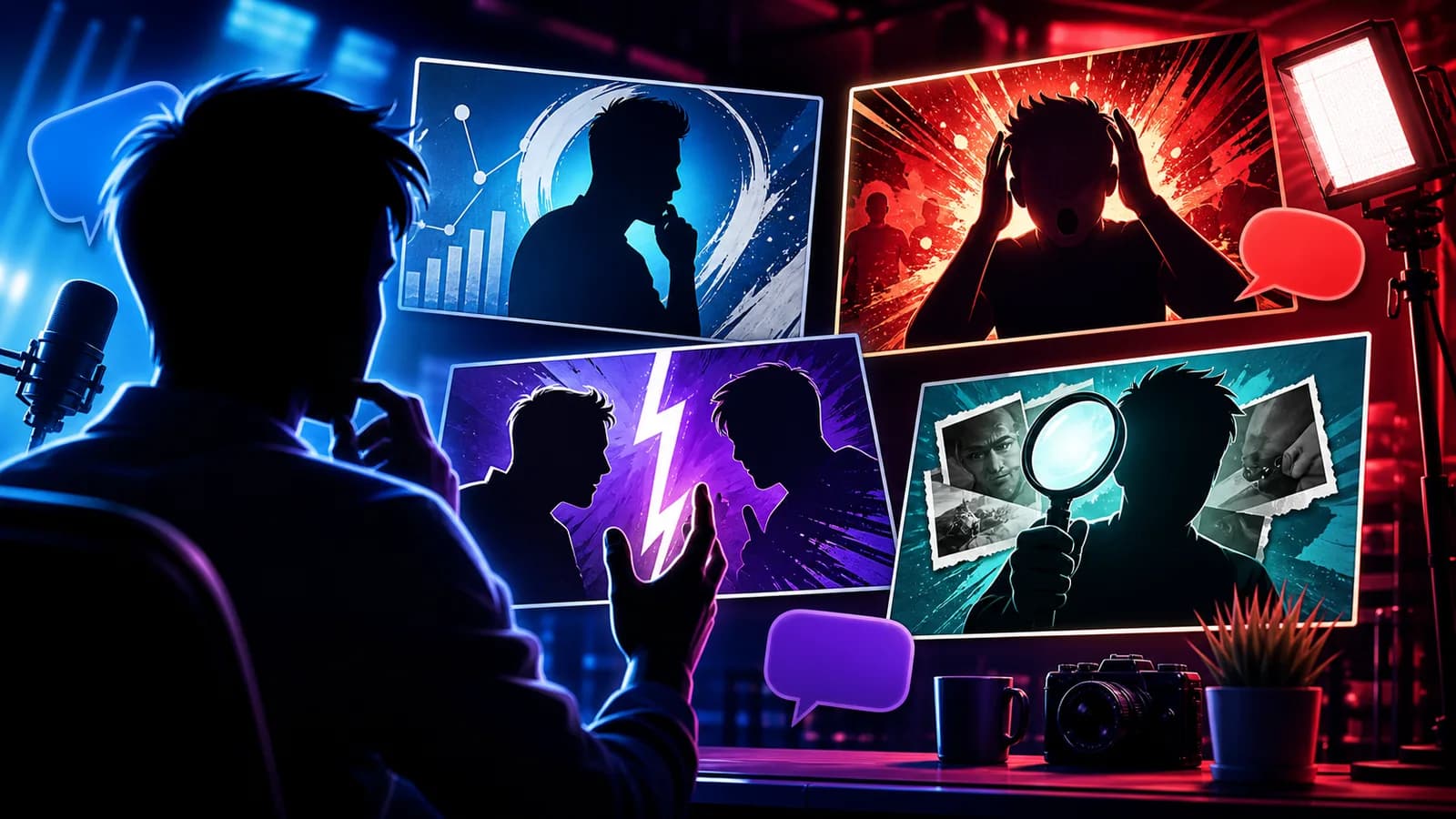
Reaction and commentary thumbnails are easy to overdo. The strongest ones show the take, evidence, contrast, or emotional beat—not just a face pretending to be shocked.
The goal is not to copy a thumbnail style from another creator. The goal is to choose a visual promise that fits the viewer's reason for clicking in this niche, then make that promise readable at feed size.
Fact-checked on 24 June 2026 against YouTube's thumbnail and title tips, custom thumbnail requirements, and title and thumbnail testing documentation. The examples below are creative strategy prompts, not performance guarantees.
What works in reaction and commentary thumbnails
Commentary viewers click when they understand what is being reacted to and what angle the creator brings. A good thumbnail gives context without becoming harassment, dogpiling, or fake outrage.
- Show the take: A thumbnail should imply whether the video is analysis, disagreement, surprise, correction, or empathy.
- Use evidence responsibly: Screenshots and receipts can be powerful, but avoid doxxing, private information, or misleading crops.
- Keep faces purposeful: Use expression when it adds meaning. A generic shocked face loses power fast.
- Avoid punching down: Packaging can be sharp without turning a person into a target.
10 reaction and commentary thumbnail ideas
Use these as starting angles inside SRGE's thumbnail idea workflow. The best version should match the actual video, the title, and the viewer's expectation after the click.
1. The take versus the receipt
Place the creator's reaction beside one clear proof object or visual clue.
2. Calm analysis in a loud situation
Contrast chaos with composure. This works well when your video is a measured breakdown.
3. Two sides of the argument
For debate videos, show the conflict as two positions rather than two demonized people.
4. The moment everyone missed
Use a magnifying-glass visual or highlighted detail to show that the video adds a new observation.
5. Expectation versus reality
This layout is useful for reviewing launches, announcements, movies, trailers, products, or creator decisions.
6. The respectful response
Response videos can look combative by default. If the tone is thoughtful, show that visually.
7. Internet pile-on explained
Show the crowd dynamic without targeting one real person. Use abstract comments, arrows, or pressure shapes.
8. The contradiction
If the video compares two claims, make the mismatch visual and simple.
9. The big reaction moment
A reaction video can still use emotion, but the source of the emotion should be visible.
10. The timeline of how it escalated
For drama explainers, a timeline can make the video feel useful instead of purely reactive.
Common mistakes to avoid
- Using a shocked face with no clue what the video is actually about.
- Cropping people or screenshots in a way that changes the meaning.
- Including private information, usernames, or sensitive details that do not need to be shown.
- Making every disagreement look like a scandal.
- Letting anger become the only visual emotion, even when the video is analysis.
How to turn the idea into a stronger thumbnail
- Test a face-led version against an evidence-led version.
- Make sure the thumbnail does not turn critique into harassment.
- If the topic is sensitive, choose clarity over humiliation.
- Track watch time and comments to see whether the packaging attracts the right conversation.
YouTube's current guidance recommends thinking about the target audience, using familiar or emotionally clear features, keeping text easy to read, avoiding overly complex designs, and reviewing analytics after publishing. Eligible creators can also test up to three title, thumbnail, or title-and-thumbnail combinations in YouTube Studio; the winning option is selected by watch-time share, not CTR alone.
For the wider strategy behind these ideas, read how to make YouTube thumbnails that get clicks. If you plan to publish multiple options, pair this article with our guide to A/B testing YouTube thumbnails.
If the first version feels close but not strong enough, run it through the YouTube thumbnail analyzer. Then regenerate or refine the idea in the AI YouTube thumbnail generator.
SRGE can help commentary creators generate sharper thumbnail angles around the take, the evidence, or the contrast—without leaning on fake outrage every time.
Keep reading