Fitness Thumbnail Ideas for Honest Transformations

Written by SRGE
We build thumbnail workflows for creators and publish practical guidance based on the product work and sources cited in each article.
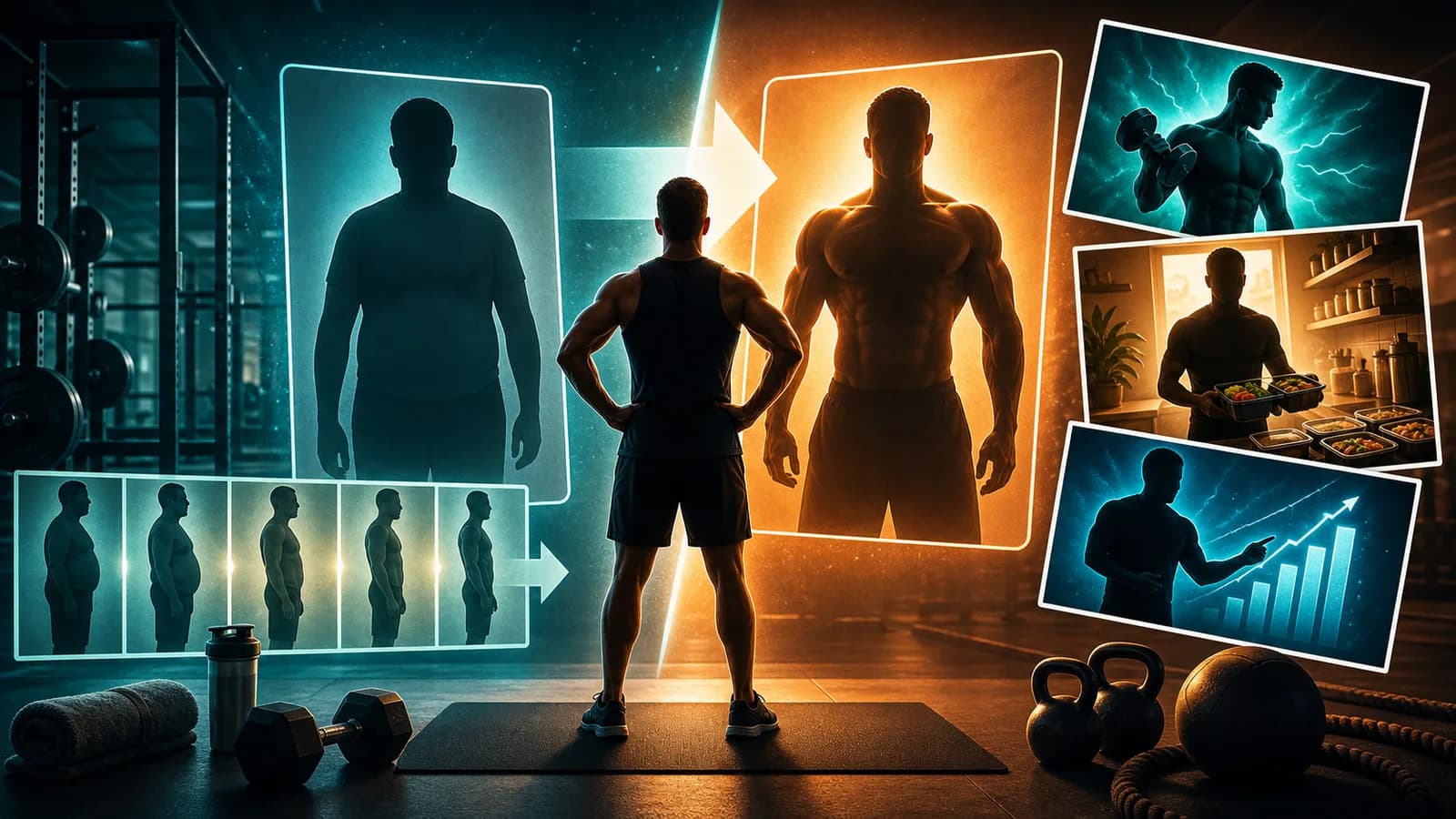
Fitness thumbnails are strongest when the viewer can see the specific transformation, challenge, or proof. They get weaker when they rely on shame, impossible claims, or generic gym intensity.
The goal is not to copy a thumbnail style from another creator. The goal is to choose a visual promise that fits the viewer's reason for clicking in this niche, then make that promise readable at feed size.
Fact-checked on 24 June 2026 against YouTube's thumbnail and title tips, custom thumbnail requirements, and title and thumbnail testing documentation. The examples below are creative strategy prompts, not performance guarantees.
What works in fitness transformation thumbnails
Fitness viewers are often deciding whether the video is realistic for them. A good thumbnail should show the outcome or method without pretending one workout, meal, or supplement changes everything overnight.
- Show honest proof: Progress photos, movement quality, strength improvement, or meal-prep consistency can all be proof when presented clearly.
- Avoid body shaming: A transformation can be motivating without humiliating the starting point.
- Make the challenge visible: A 30-day habit, heavy lift, mobility goal, or conditioning test should be visible as a concrete task.
- Keep the promise realistic: The thumbnail should not imply medical outcomes or guaranteed changes the video cannot responsibly support.
10 fitness transformation thumbnail ideas
Use these as starting angles inside SRGE's thumbnail idea workflow. The best version should match the actual video, the title, and the viewer's expectation after the click.
1. The measurable progress shot
Show the visible change or performance metric as a clean before/after story without cluttering the frame.
2. The 30-day challenge
Use a calendar, repeated habit cue, or sequence of effort to show that the video is about consistency.
3. The exercise fix
If the video teaches form, package the problem and corrected movement visually.
4. The meal-prep result
Nutrition videos often work when the meal and outcome are both clear. Avoid implying one food causes a full transformation.
5. Strength milestone
A milestone thumbnail should show the lift, object, or test that proves progress.
6. Beginner versus advanced
Comparison videos become clearer when the two options are visually distinct and fairly represented.
7. The mobility unlock
Mobility and rehab-adjacent content needs careful wording and imagery. Show comfort or range improvement without medical claims.
8. The home workout proof
Home workout thumbnails should show the constraint: small space, limited gear, or time limit.
9. The mistake everyone repeats
Make the repeated error visible. A single wrong setup or posture is more useful than a generic gym selfie.
10. The comeback story
For personal videos, use emotion and progression. The viewer should understand that the story is about returning, not only aesthetics.
Common mistakes to avoid
- Using transformation imagery that humiliates the starting point.
- Implying one routine guarantees a specific body outcome.
- Making the physique the only promise when the video is really about habit, form, or education.
- Using tiny workout-plan text that disappears on mobile.
- Overediting bodies until the thumbnail feels untrustworthy.
How to turn the idea into a stronger thumbnail
- Test a proof-led version against a challenge-led version.
- Check whether the image still feels honest when separated from the title.
- Use before/after layouts only when the video genuinely supports the comparison.
- Review comments and retention to see whether the thumbnail attracted the intended viewer.
YouTube's current guidance recommends thinking about the target audience, using familiar or emotionally clear features, keeping text easy to read, avoiding overly complex designs, and reviewing analytics after publishing. Eligible creators can also test up to three title, thumbnail, or title-and-thumbnail combinations in YouTube Studio; the winning option is selected by watch-time share, not CTR alone.
For the wider strategy behind these ideas, read how to make YouTube thumbnails that get clicks. If you plan to publish multiple options, pair this article with our guide to A/B testing YouTube thumbnails.
If the first version feels close but not strong enough, run it through the YouTube thumbnail analyzer. Then regenerate or refine the idea in the AI YouTube thumbnail generator.
SRGE can help fitness creators package progress, form fixes, challenges, and nutrition stories in a way that feels specific instead of sensational.
Keep reading