Documentary Thumbnail Ideas for Mystery and Story

Written by SRGE
We build thumbnail workflows for creators and publish practical guidance based on the product work and sources cited in each article.
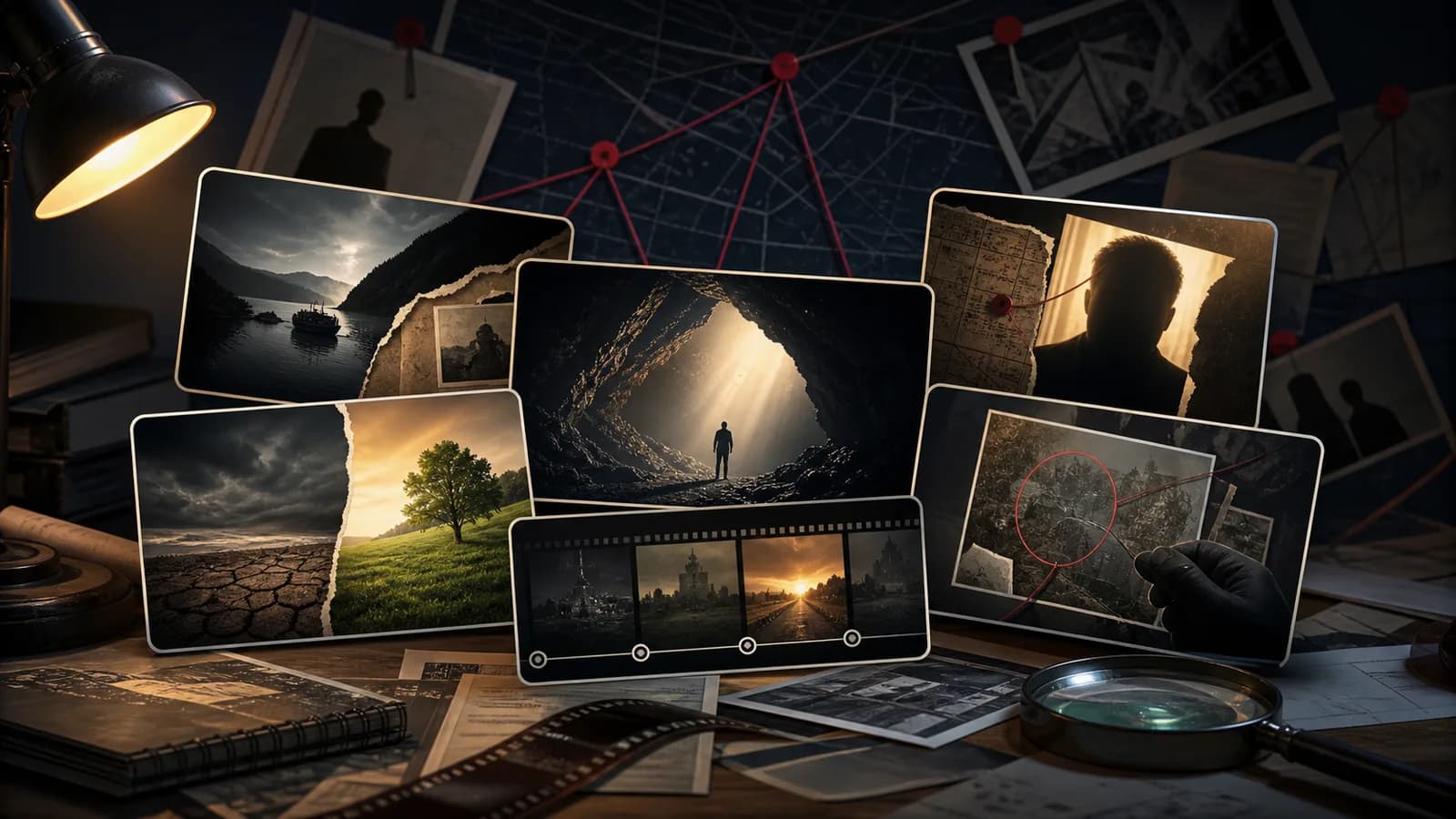
Documentary thumbnails are not just mood boards. They need a central question: what happened, who changed, what is hidden, or why should the viewer care?
The goal is not to copy a thumbnail style from another creator. The goal is to choose a visual promise that fits the viewer's reason for clicking in this niche, then make that promise readable at feed size.
Fact-checked on 24 June 2026 against YouTube's thumbnail and title tips, custom thumbnail requirements, and title and thumbnail testing documentation. The examples below are creative strategy prompts, not performance guarantees.
What works in documentary YouTube thumbnails
Documentary viewers often click for mystery, stakes, access, or a strong human story. The thumbnail should give them a question to resolve without misrepresenting the facts.
- Choose one mystery: A clear unanswered question is stronger than five unrelated clues.
- Show human stakes: A place, object, or timeline becomes more clickable when the viewer understands who it affects.
- Use evidence carefully: Photos, maps, and documents can imply credibility, but they should not fabricate real evidence.
- Avoid sensational distortion: Documentary packaging can be dramatic without inventing danger, guilt, or outcomes.
10 documentary YouTube thumbnail ideas
Use these as starting angles inside SRGE's thumbnail idea workflow. The best version should match the actual video, the title, and the viewer's expectation after the click.
1. The missing piece
Show a clear gap in the story: a missing photo, empty chair, torn map, or blank timeline slot.
2. Before the turning point
If the video explains a collapse, rise, or scandal, package the moment right before change.
3. The hidden map
Maps work when they reveal a journey, connection, or overlooked location rather than becoming background texture.
4. One object explains the story
Choose the artifact that carries the narrative: a tape, letter, prototype, trophy, receipt, or photograph.
5. Timeline fracture
Use a broken timeline to show that the story has a before, after, and unanswered middle.
6. The witness perspective
When the story depends on one person's experience, make their silhouette or point of view the anchor.
7. The place changed
Location documentaries can use a landscape before/after or visible contrast between past and present.
8. The reveal under the surface
Use layers: a polished surface peeled back to show the deeper story underneath.
9. The unlikely connection
Show two things that seem unrelated but are connected by the video.
10. The final question
For unresolved stories, use a single symbolic question without text: an open door, half-lit face, or unknown path.
Common mistakes to avoid
- Turning a factual story into a fake crime-board cliché.
- Using too many tiny photos or document scraps for the viewer to parse.
- Implying guilt, danger, or scandal that the video does not establish.
- Choosing mood over a clear story question.
- Using real people, victims, or sensitive events without appropriate care and rights.
How to turn the idea into a stronger thumbnail
- Test a mystery-led thumbnail against a human-stakes-led thumbnail.
- Ask whether the image creates one question or several confusing ones.
- Keep the title responsible; the image should not overstate the story.
- Review watch time as well as clicks, because misleading documentary packaging can hurt satisfaction.
YouTube's current guidance recommends thinking about the target audience, using familiar or emotionally clear features, keeping text easy to read, avoiding overly complex designs, and reviewing analytics after publishing. Eligible creators can also test up to three title, thumbnail, or title-and-thumbnail combinations in YouTube Studio; the winning option is selected by watch-time share, not CTR alone.
For the wider strategy behind these ideas, read how to make YouTube thumbnails that get clicks. If you plan to publish multiple options, pair this article with our guide to A/B testing YouTube thumbnails.
If the first version feels close but not strong enough, run it through the YouTube thumbnail analyzer. Then regenerate or refine the idea in the AI YouTube thumbnail generator.
SRGE can help documentary creators turn a timeline, object, location, or human story into a thumbnail that feels cinematic without becoming misleading.
Keep reading